xplore
What if travel planning felt like a journey in itself—something visual, intuitive, and deeply personal?

problem
Travel planning is fragmented and overwhelming. Users jump between multiple platforms for inspiration, logistics, and research, leading to decision fatigue, wasted time, and a lack of meaningful personalization.
solution
Xplore is an AI-powered travel discovery app that centralizes inspiration into one seamless, personalized experience. Using AI to understand users’ interests, mood, and preferences, the app delivers tailored destination recommendations—reducing decision fatigue and transforming travel planning into a simple, visual, and inspiring journey.
who is it for?
Xplore was designed for modern, digitally active travelers—particularly millennials and Gen Z users—who seek inspiration online but feel overwhelmed by too many choices and disconnected tools when planning trips.
Xplore is a conceptual travel app born out of that very question. Over the course of 6 weeks, I led the design of a mobile experience that helps users discover destinations not through lists or filters—but through feeling. My goal was to reimagine travel discovery as something emotional, engaging, and easy to act on.
This project began with a personal frustration. Every time I wanted to travel, the excitement quickly turned into overwhelm—jumping between Instagram, Google Maps, flight apps, and endless tabs. Instead of feeling inspired, I felt stuck. Realizing I wasn’t alone in this experience, I decided to explore the problem deeper and design a smarter, AI-powered way to make travel discovery simple and inspiring again.
year
2021
timeframe
6 weeks
tools
Framer
category
UX/UI Design
search engine
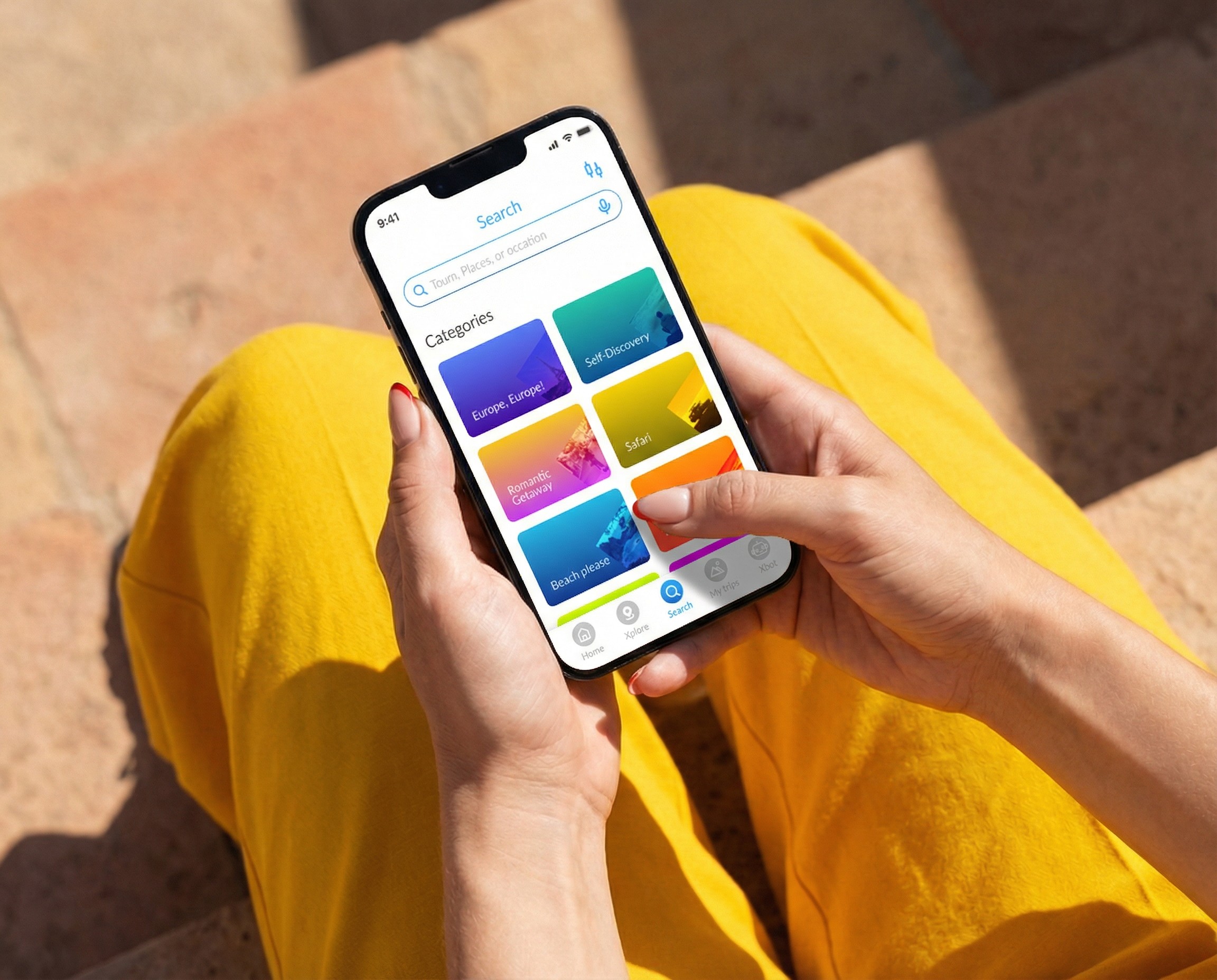
The search function now boasts its dedicated page, enhancing its capabilities significantly. Alongside the familiar search bar, users will discover categories brimming with deals tailored for unique occasions. This design not only simplifies the search process but also makes it more instinctive and user-friendly, guiding you effortlessly to the perfect offers.
xplore
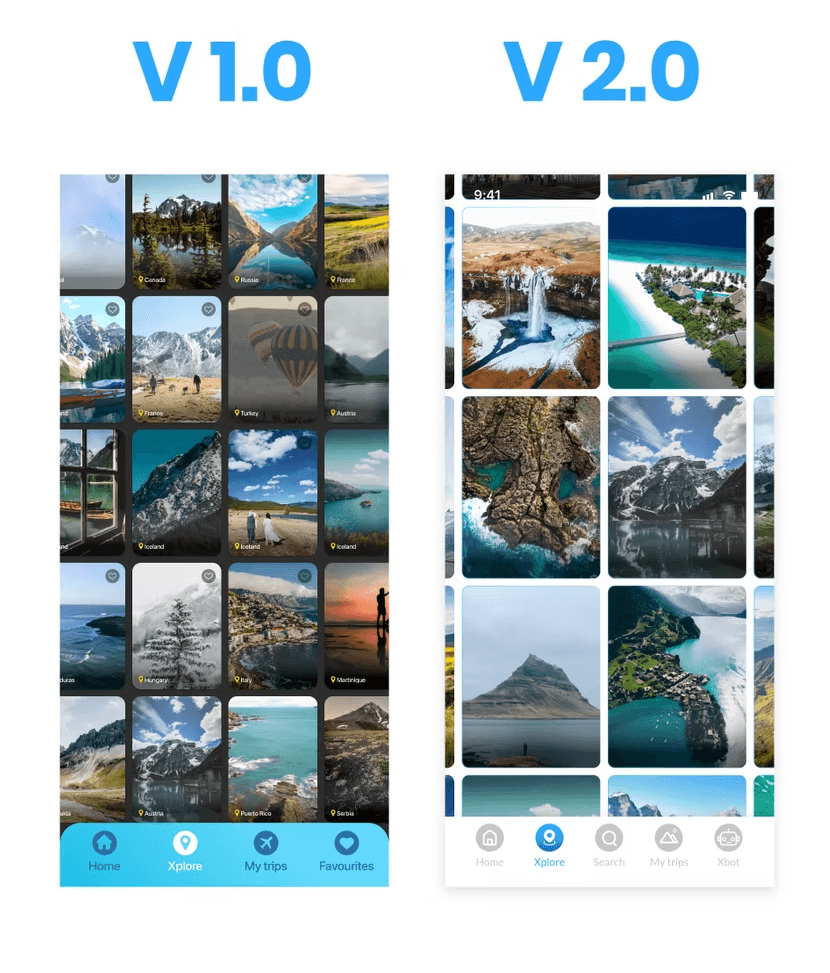
Xplore unveils an interactive board filled with animated previews of stunning locations from around the globe, aimed at sparking inspiration for your next trip. This feature allows for seamless vertical and horizontal scrolling, inviting users to dive into a world of endless possibilities and discover the perfect adventure waiting for them.
flight search
Xplore introduces a streamlined and adaptable flight search feature, enabling you to discover flight tickets with just a few taps. This intuitive tool simplifies the process, making your journey from search to takeoff effortlessly quick and easy.
xbot - AI assistant
A standout feature of Xplore is the ability to search by image. If you have a photo of an unknown destination you're curious about, Xbot is here to assist. Simply upload the picture, and Xbot will swiftly identify the location for you, bridging the gap between wonder and knowledge.
Research Phase
Secondary Research — Market Signals
To understand the broader landscape, I triangulated data from industry reports, behavioral statistics, and UX publications. The goal was to determine if the problem was anecdotal or systemic.
Research Sources
Industry Trend Reports
Cognitive Load Studies
Public Earnings Insights
Heuristic Audits
01
Visual-First Discovery
Booking abandonment on travel sites due to overload.
"Travel planning isn't just a logistics problem—it's a cognitive one. The industry creates fragmentation, and users pay the price in time and mental energy."
Primary Research — User Reality
I conducted moderated interviews with 7 diverse travelers to map their behaviors, tools, and emotional drivers.
7 Participants
Solo, Couples, Families
45 Min Sessions
Moderated Interviews
Tool Mapping
Behavioral Walkthroughs
Key Inquiry Areas
Q:
Q:
Q:
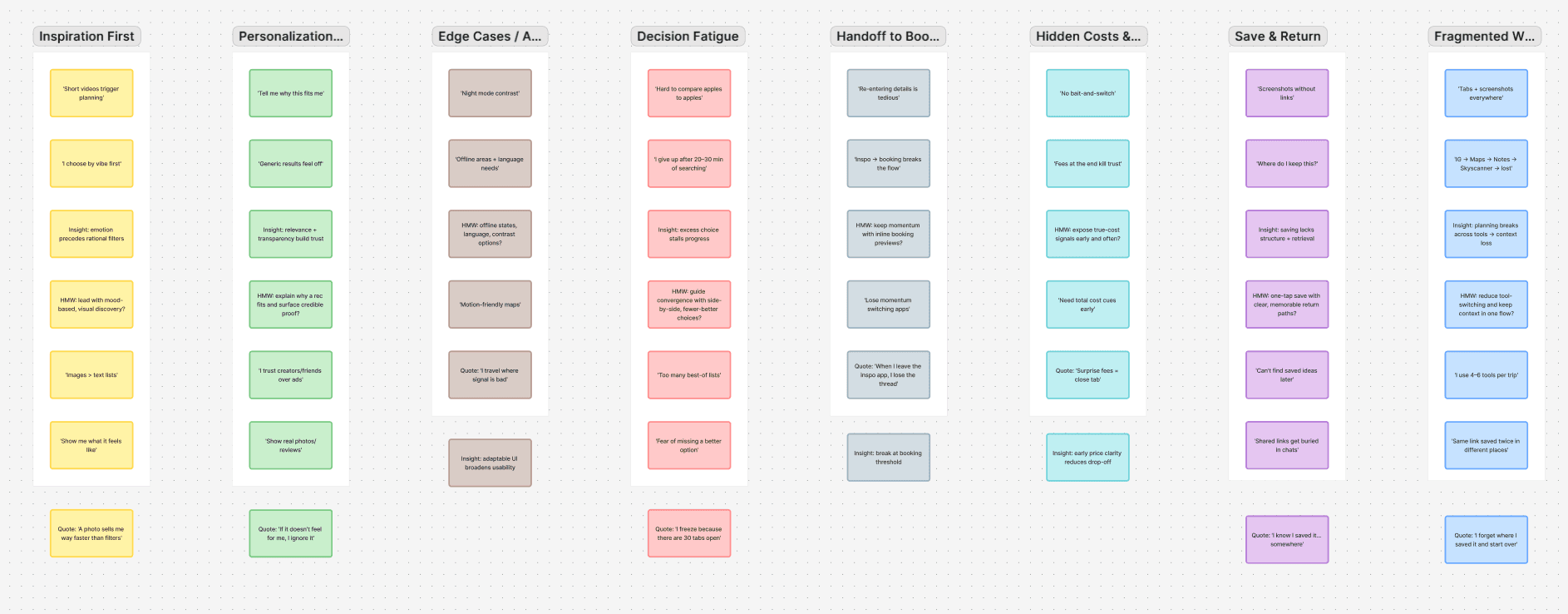
Affinity Map
To transform 5+ hours of interview dialogue and 100+ raw observations into a structured roadmap of user pain points and opportunities.
Key Discoveries
I conducted moderated interviews with 7 diverse travelers to map their behaviors, tools, and emotional drivers.
The core insight
Users don't struggle with booking.
They struggle with deciding.
Travel platforms optimize for transactions—not inspiration. The real friction lies in cognitive overload, lack of true personalization, and fragmented mental models.
From Research to Product
Research revealed that users don’t need more options—they need intelligent narrowing. This insight directly shaped Xplore’s development roadmap.
Define Phase
Narrowing the Focus
After identifying patterns in the discovery phase, the goal was to translate fragmented insights into a concrete direction. I moved from observing "what is happening" to defining "what truly needs solving."
"what truly needs solving."
Target User
Journey Gaps
Opportunities
Opportunities
Synthesis
Research revealed that users don’t need more options—they need intelligent narrowing. This insight directly shaped Xplore’s development roadmap.
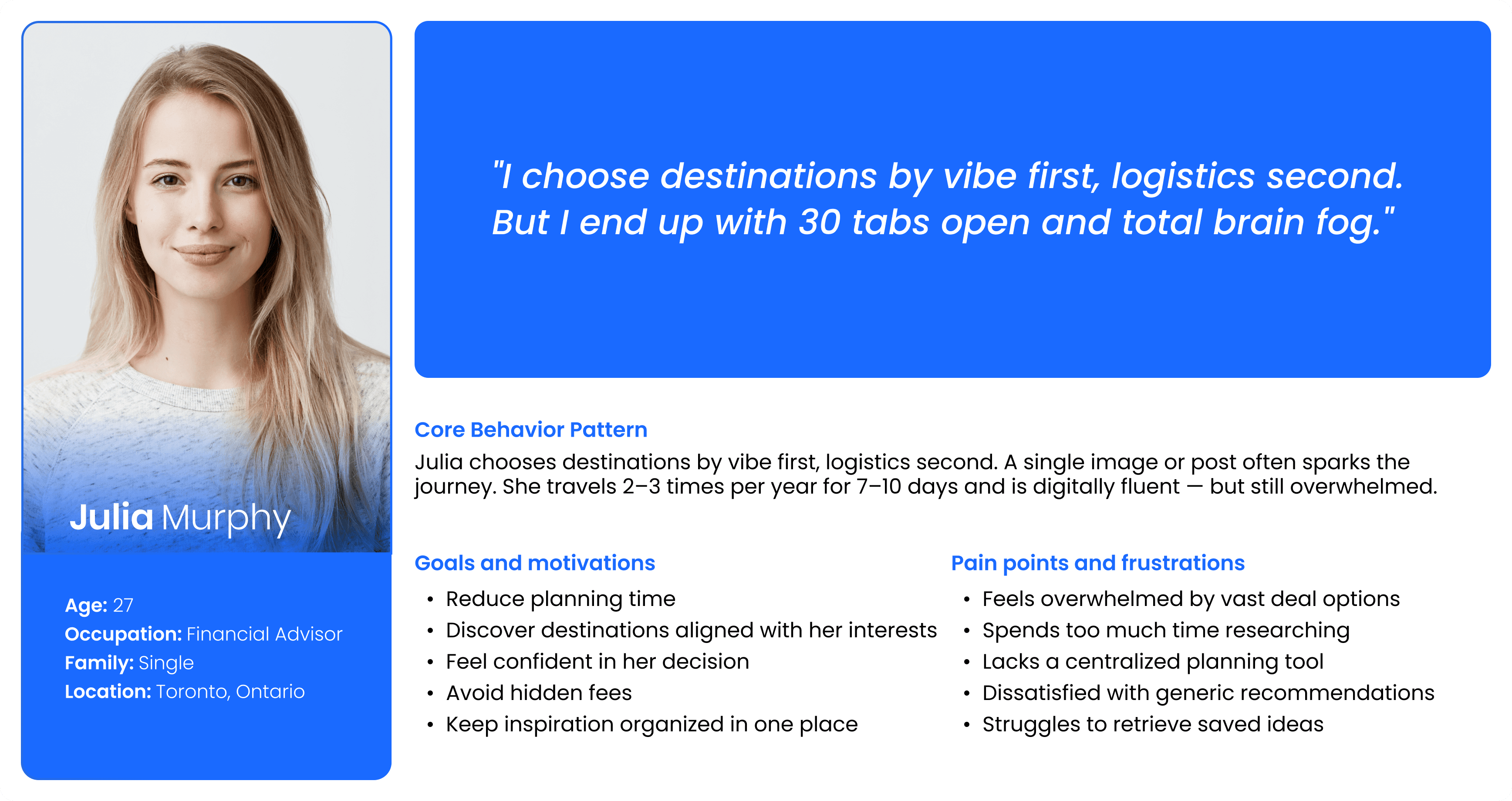
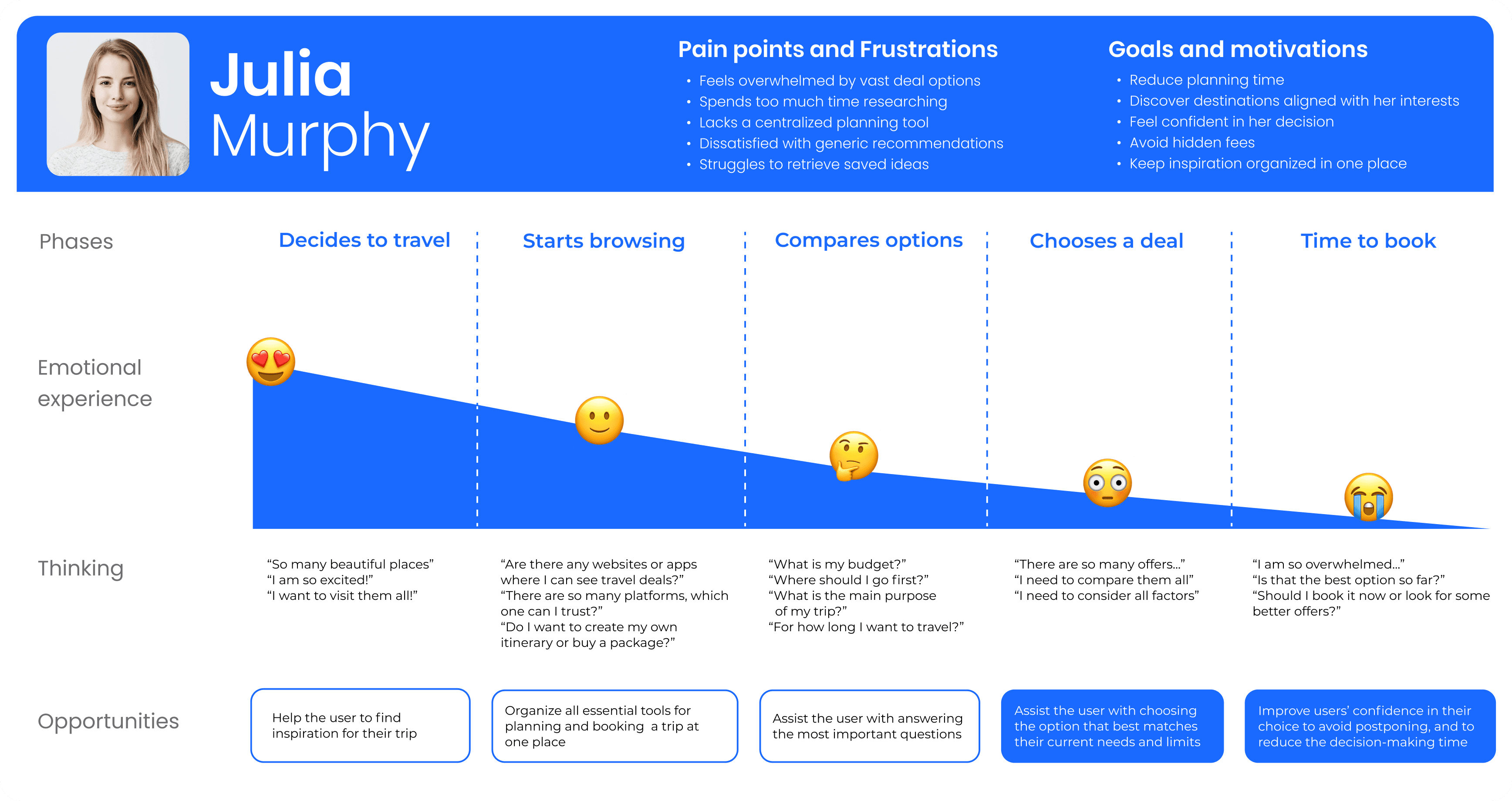
The core insight
The emotional drop doesn’t happen at booking. It happens during discovery and comparison when tool-switching kills momentum.
Energy drops steadily as she moves across fragmented tools.
Three Strategic Pillars
The Behavior-Driven Pivot
After analyzing all the data I gathered by the moment, I reviewed my initial problem statement I decided to update it.
The Opportunity Space
After analyzing all the data I gathered by the moment, I reviewed my initial problem statement I decided to update it.
Finding the solution
Bridging the Gap
Reflecting on the core pain points—fragmented workflows, decision fatigue, and shaky trust—I looked beyond travel to find products that excel at discovery.
"what truly needs solving."
Target User
Journey Gaps
Opportunities
Opportunities
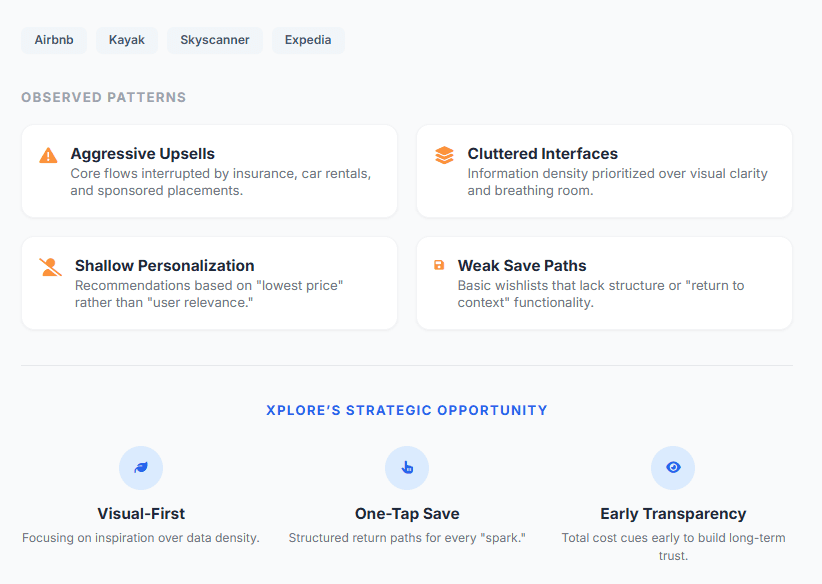
Analyzing the Industry Friction
While benchmarking provided inspiration from outside the travel industry, I also audited direct competitors to identify where current systems fail the user.
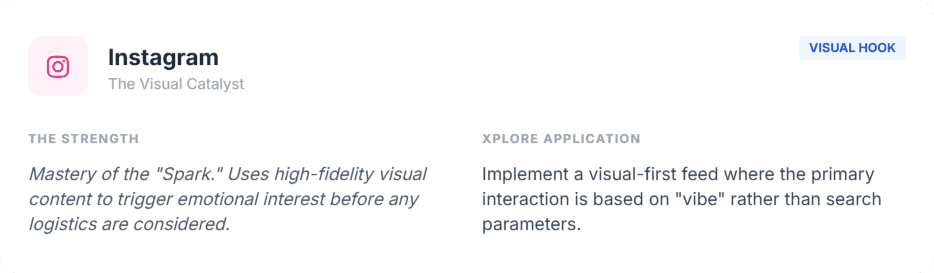
Learning from Discovery Leaders
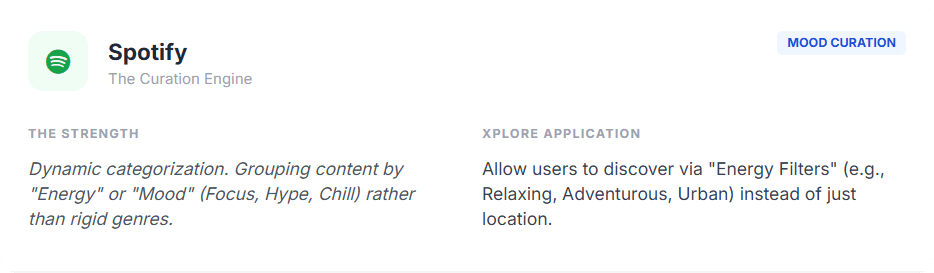
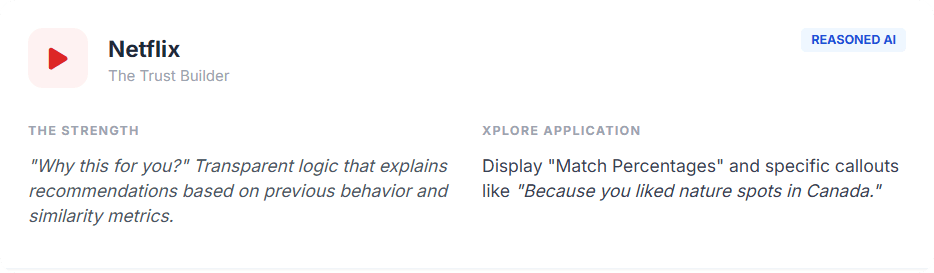
To solve travel’s discovery problem, I audited three platforms that have mastered the art of "narrowing the noise." I identified specific UX patterns to bridge the gap between inspiration and action.
Aligning with Industry Signals
Moving forward I conducted additional research to support my hypothesis and previous findings.
Actionable Requirements
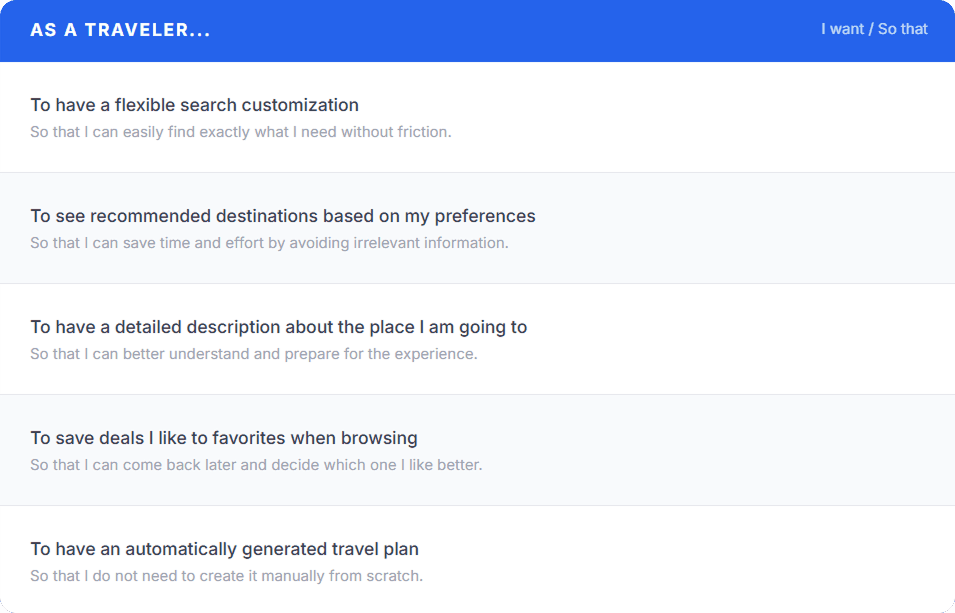
To turn research insights into reality, I translated needs into **User Stories**. This forced clarity on the who, what, and why.
Prototypes
Low-Fidelity
Transitioning from paper to digital allowed for the first true assessment of the product's visual hierarchy. The focus here was on spatial logic and navigation flow rather than aesthetic detail.
Digital Wireframes
Evaluated the screen layout's functional logic to ensure that complex data points remained scannable for the user.
Onboarding Design
Developed a structured questionnaire flow to feed the personalization engine, ensuring user intent is captured early without causing fatigue.
Primary Flow Identification
Architected comparison views that account for safety, budget, and reviews—the key variables identified in the research phase.
Mid-Fidelity
Mid-fidelity served as the primary testing ground. By adding grayscale components and basic interactions, I was able to observe how users navigated real-world travel scenarios.
Visual-First Discovery
5/5 participants praised the user-friendly layout. The interface successfully reduced the cognitive load typically associated with travel booking.
Visual-First Discovery
Testing revealed that the onboarding questionnaire's length was a barrier to entry, leading to a redesign focused on progressive disclosure.
The Xplore Board
An interactive destination board evolved from user suggestions. It uses animated previews and dual-axis scrolling to make "Discovery" feel like an immersive experience rather than a search query.
Inspiration-First UX
Designed to inspire rather than just transact. The Xplore feature allows users to "feel" the destination through horizontal and vertical storytelling.
High-Fidelity (v1)
The final stage integrated the refined color palette, typography, and high-resolution imagery. This version transformed wireframes into a functional, brand-aligned experience ready for development handoff.
94%
Task Completion Rate
v.1.2
Iteration Status
Digital Wireframes
Evaluated the screen layout's functional logic to ensure that complex data points remained scannable for the user.
Onboarding Design
Developed a structured questionnaire flow to feed the personalization engine, ensuring user intent is captured early without causing fatigue.
Primary Flow Identification
Architected comparison views that account for safety, budget, and reviews—the key variables identified in the research phase.
TEST & ITERATE
Evolution
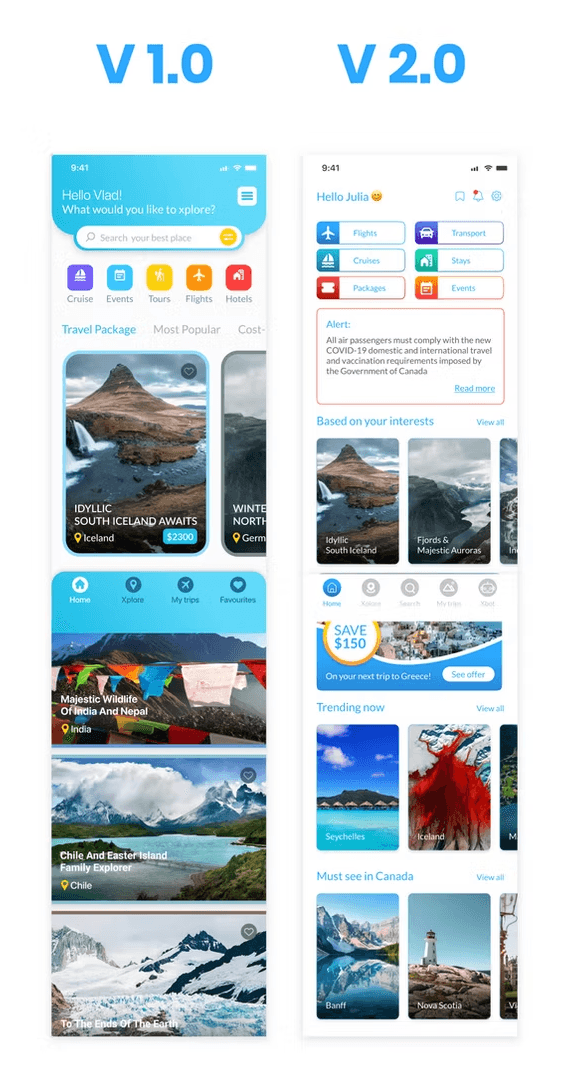
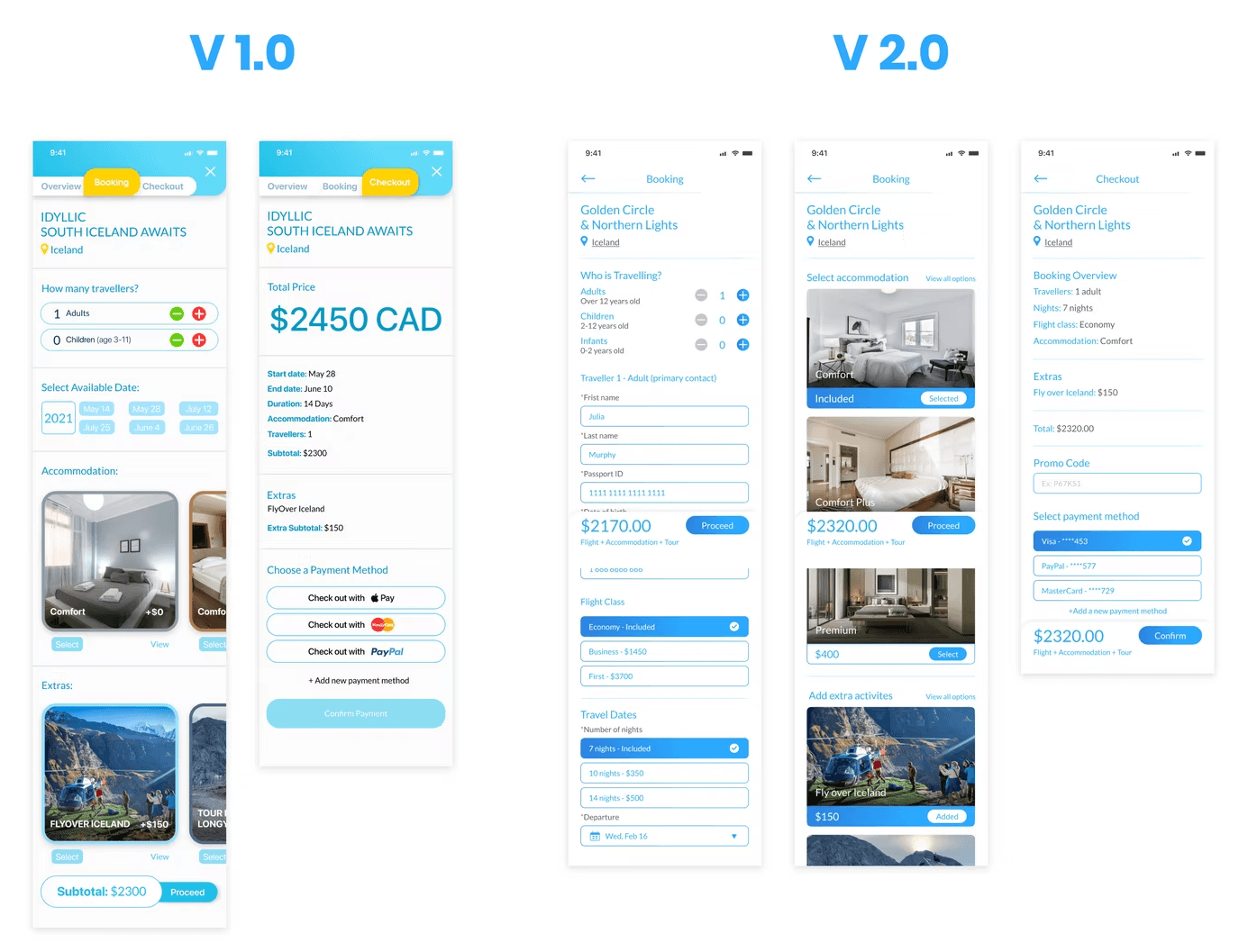
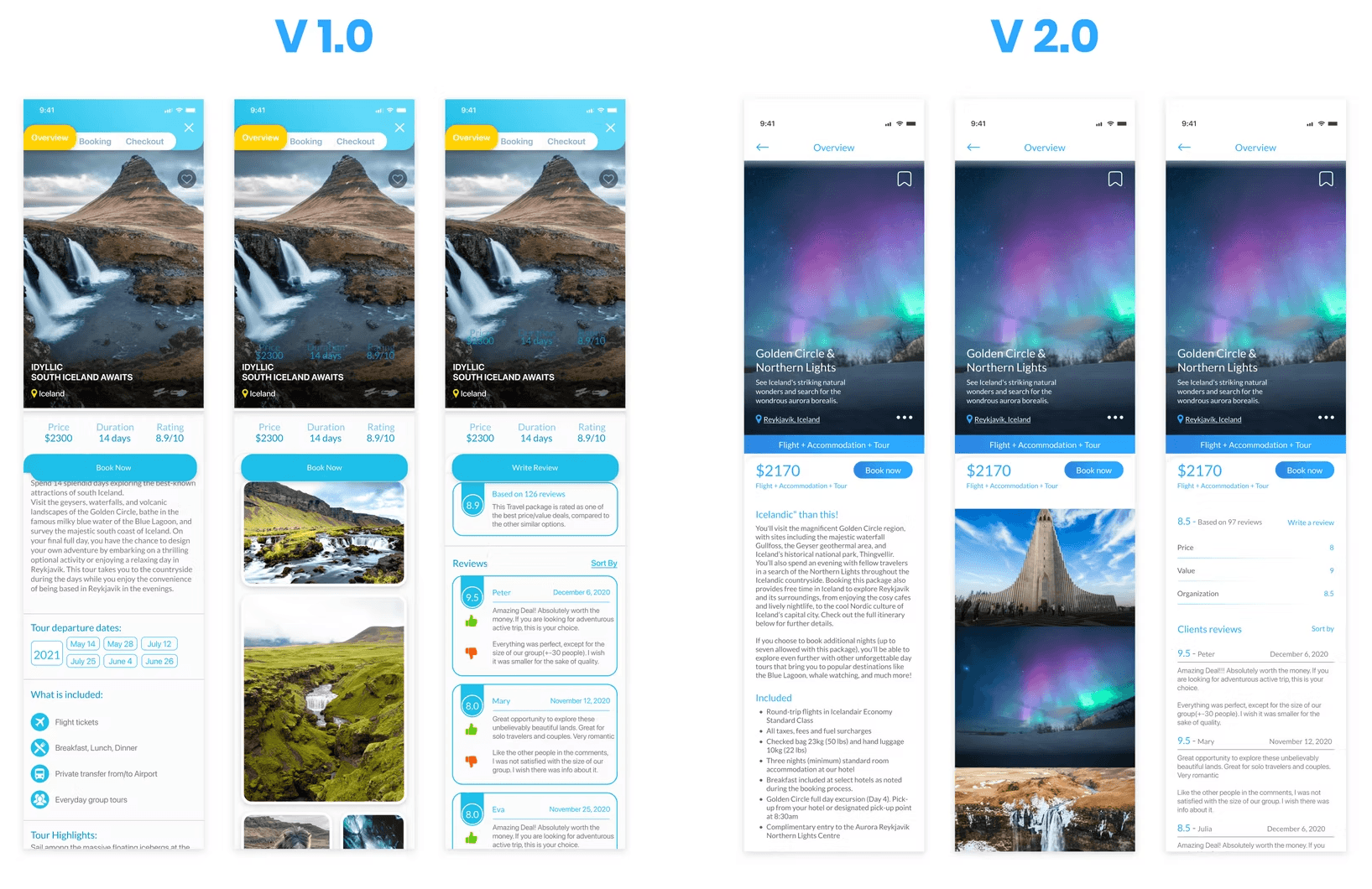
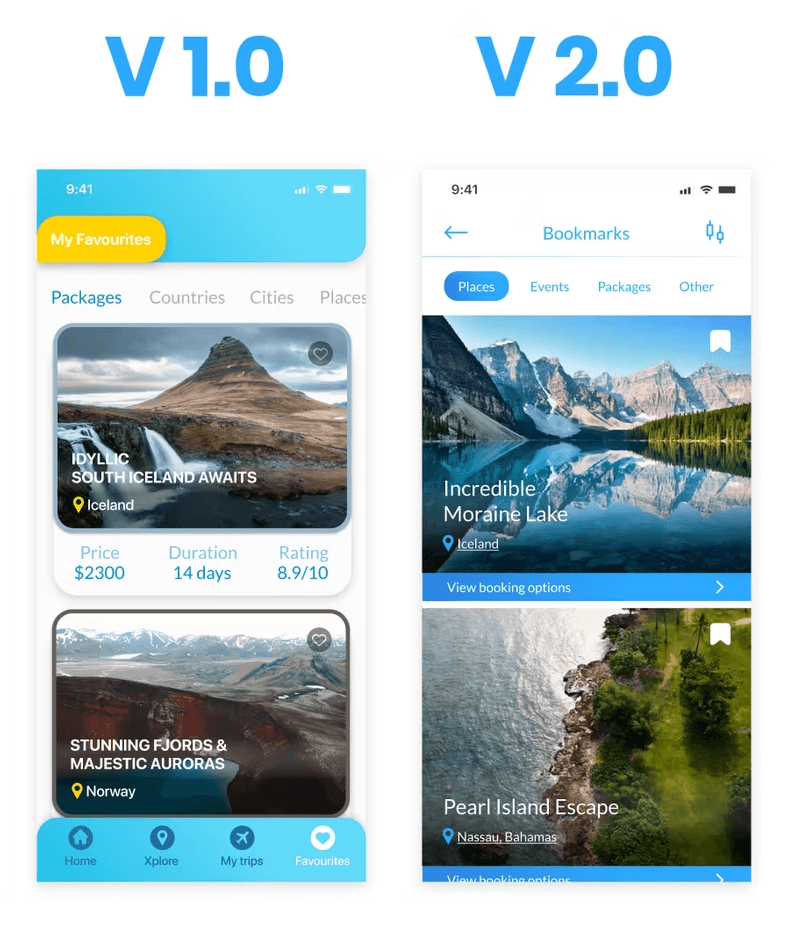
Although the project reached its initial "finished" state, I pushed further—running additional usability tests and restructuring the application based on user feedback. This phase was about polishing the friction points and elevating the overall experience from functional to delightful.
Extended Functionality
To unblock key tasks and reduce backtracking, I added filters and sorting (vibe, distance, seasonality), notifications to re-engage saved items, and an AI-powered bot for natural-language queries.
Refreshed UI
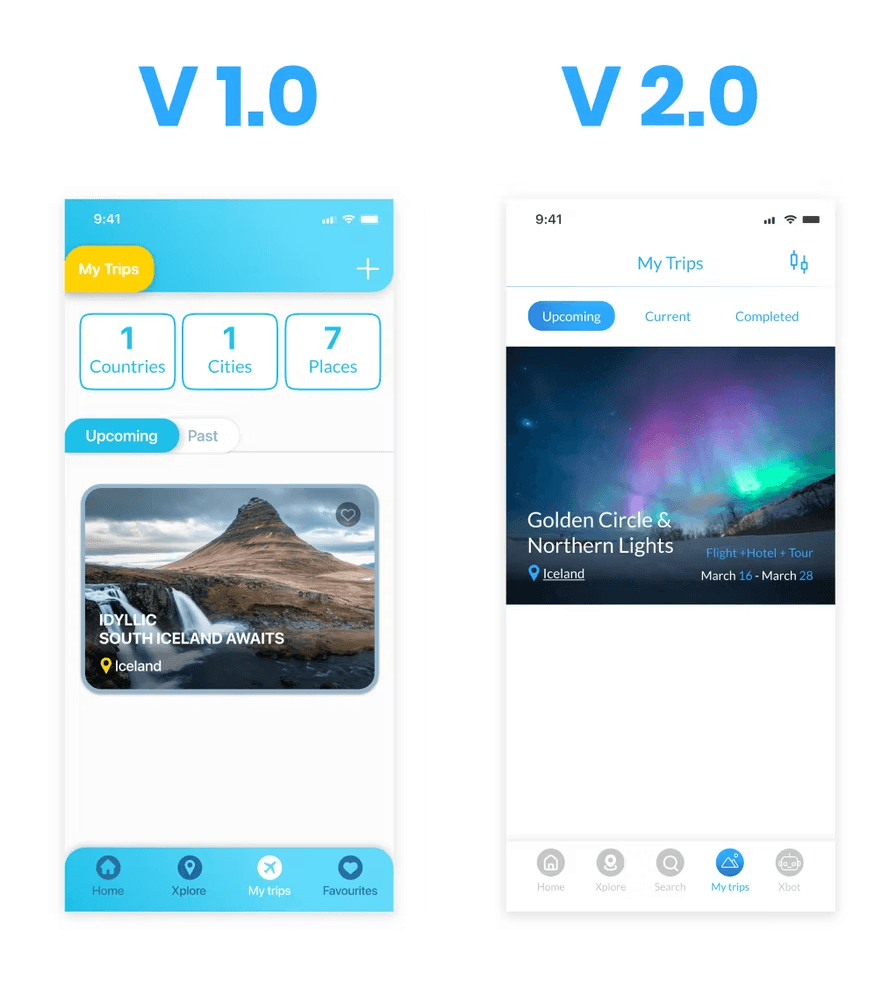
I simplified the color palette, removed nonfunctional decoration, and tightened typographic and spacing rules. Cards were cleaned up so imagery leads and CTAs are unmistakable.
Improved Navigation
Restructured navigation around the core journey with a persistent bottom nav (Explore, Shortlist, Search, Profile), clearer labels, and stronger save affordances.
Rebuilt Onboarding
Addressing the Mid-Fi fatigue, I streamlined the questionnaire into progressive categories and added "Skip" options. This allowed users to reach the value-proposition faster.
THE NEXT STEPS
Developing
The research consistently highlighted a major pain point: travel inspiration often hits its peak in locations where internet access is at its lowest. To transition Xplore from a "discovery app" to a "essential travel utility," the immediate next step is the engineering of Offline Maps functionality.
Offline Map Architecture
Building a robust caching system that prioritizes user-defined 'regions' and 'shortlists' to optimize storage space while maintaining visual fidelity.
Independence & Safety
Research showed users feel vulnerable when losing signal during a trip. Offline maps provide the 'peace of mind' required to explore off-grid locations confidently.
Global Resilience
The roadmap extends to 'Smart Pre-downloads' where Xplore anticipates your next destination based on your itinerary and automatically prepares offline data over Wi-Fi.
see also